
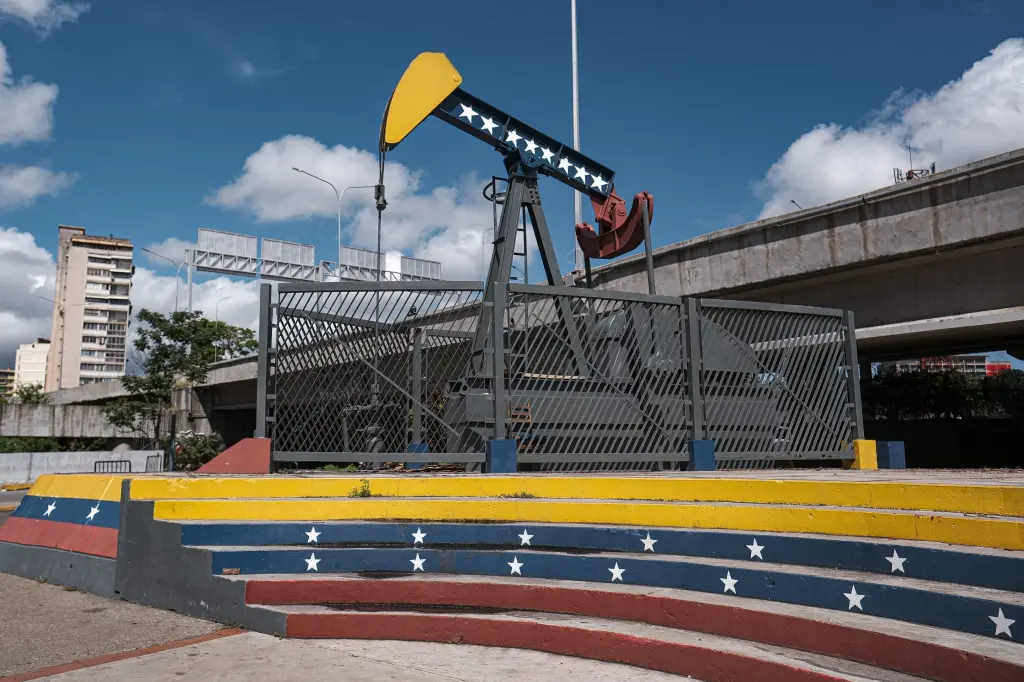
President Trump has announced what he is calling the biggest oil deal in world history, an agreement that would give the United States majority control over 17 oilfields in Venezuela holding more than 65 billion barrels of proven reserves.
Under the arrangement, the US Department of Defense would take a 35 percent stake in North American Blue Energy Partners, the entity set to operate the fields. Backers of the deal are projecting more than 100 billion dollars in investment and roughly 209 billion dollars in expected tax revenue for Venezuela, with the goal of roughly doubling American oil reserves and boosting domestic supply.
The operator, North American Blue Energy Partners, is controlled by Venezuelan businessman Alejandro Betancourt Lopez, who is currently under investigation in Switzerland. Chevron remains the largest private oil producer already operating in the country, and smaller firms including Hunt Oil are moving to invest, while ExxonMobil and ConocoPhillips have so far stayed on the sidelines. On the Venezuelan side, interim President Delcy Rodriguez, who took power after Nicolas Maduro was removed from the country earlier this year, has been positioning herself as willing to work with Washington on economic matters like this one.