
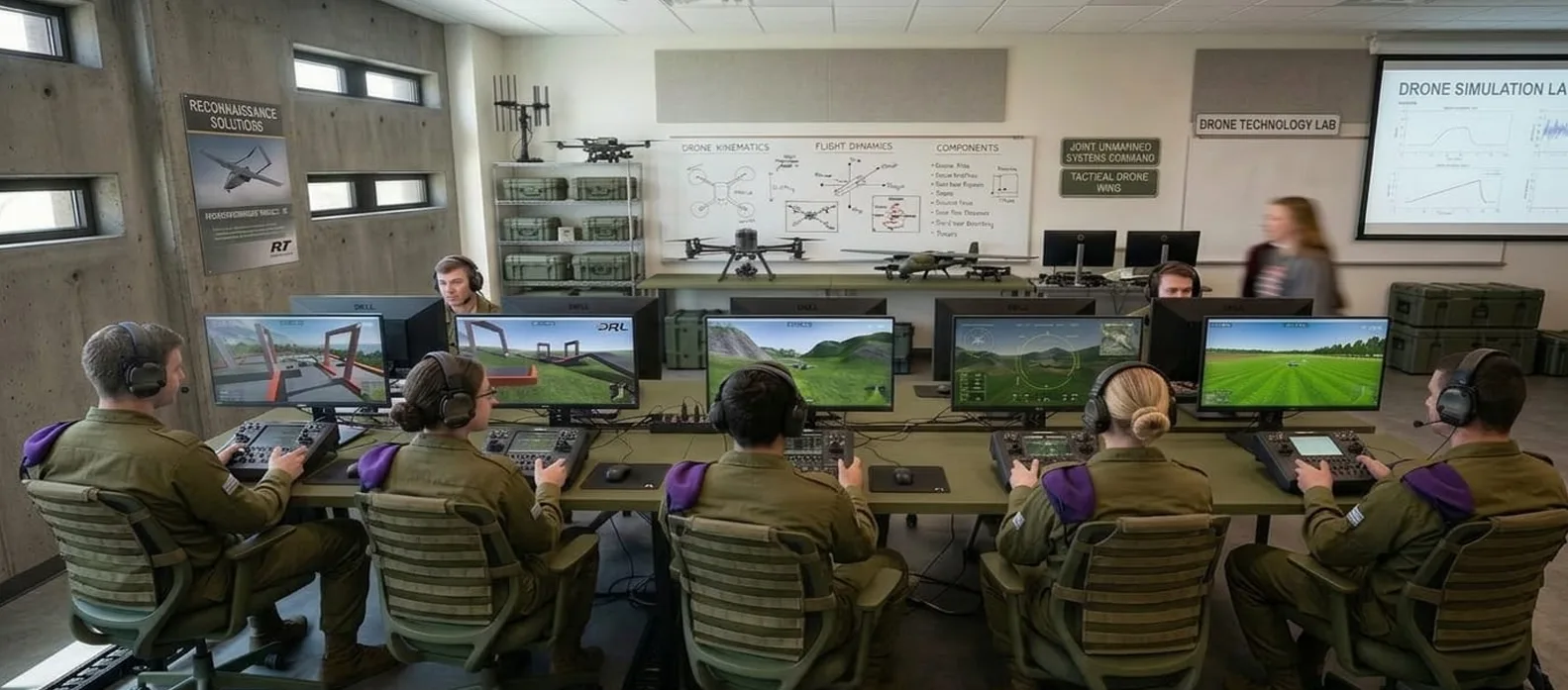
In the global race to dominate the future of unmanned defense technology, a new player is emerging from an unexpected place: the Givati Brigade Association. As Washington monitors the pace of drone innovation and Beijing pushes to close the gap in unmanned systems, Israel is quietly building something that could shift the balance, the Givati Drone Center.
“Every major power is watching how this technology develops, because whoever masters it first sets the standard for everyone else,” said Itzhak Levit, Chairman of the Givati Brigade Association. “Israel has always found a way to lead in moments like this, and this Center is proof that leadership is still being built, right now, on the ground.”
Levit sees the current global environment, one defined by intense competition among the United States, China, and other major powers over drone and unmanned systems capability, as exactly the moment for an institution like Givati to step forward. “We are not trying to compete with the size of these countries’ defense budgets,” Levit said. “We are competing on speed, on real battlefield knowledge, and on the ability to turn lessons from the field into technology faster than anyone else.”
A Development Model the World Is Taking Notice Of
That speed comes from the work of Jessica Zandani, a Major Director of the Academy, who has built a training and innovation model designed around rapid iteration rather than slow-moving research cycles. Combining live battlefield data, hands-on maintenance training, and on-demand hardware development through 3D printing, Zandani’s approach produces new solutions in a fraction of the time typically required in traditional defense development.
“While other countries are running long-term research programs, we are solving real problems in real time,” Zandani said. “That difference matters more now than ever. The countries watching us most closely understand that whoever can move fastest from problem to solution is the one who ends up ahead.”
Zandani said she is aware the Center’s work is being observed well beyond Israel’s borders. “We know eyes are on what we’re building here, from allies and from competitors alike. That tells us we are doing something right. It also tells us we cannot slow down.”