
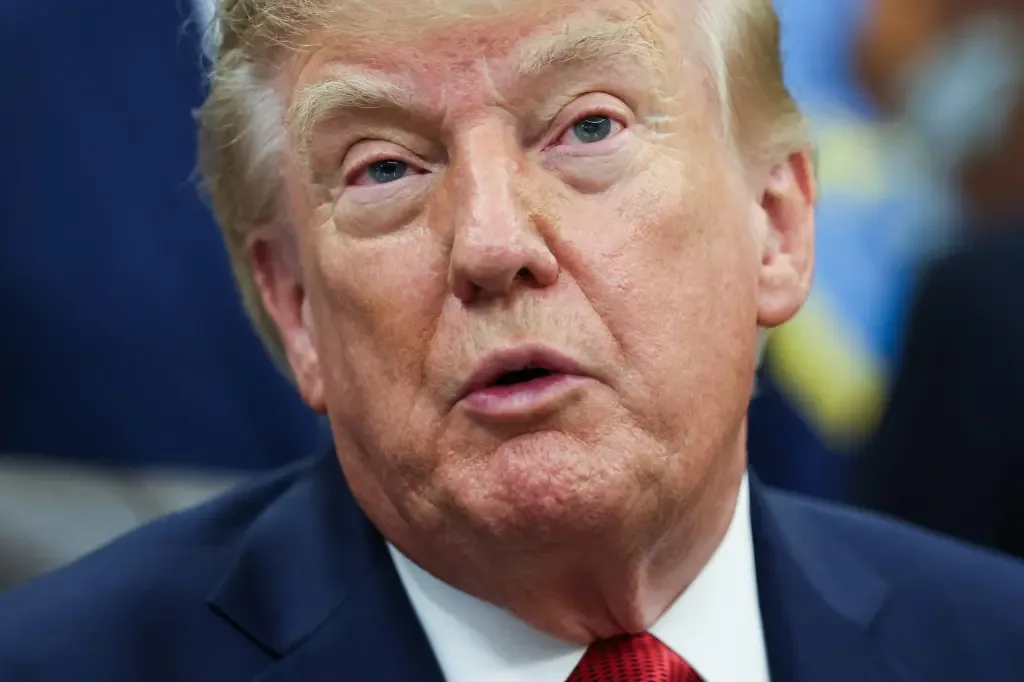
President Trump announced plans to create an "AI Force" and put a new administration structure in place to oversee artificial intelligence policy, while rejecting recent calls from parts of the industry to slow the pace of AI development. Trump described those calls as politically motivated, calling them hoaxes.
David Sacks, who had been serving as the administration's AI and crypto czar, is shifting to co-chair the Council of Advisors on Science and Technology as part of the reorganization.
Rather than impose new restrictions on the AI industry, Trump said the administration would rely on existing legal systems to monitor for misconduct. He projected that AI could eventually account for as much as 25% of U.S. GDP.
The announcement follows a period of public caution from AI companies. On September 12, Anthropic announced a new set of safety measures, part of a broader industry conversation about slowing certain aspects of development on safety grounds. Anthropic chief executive Dario Amodei, OpenAI chief executive Sam Altman, xAI's Elon Musk, and Google DeepMind co-founder Demis Hassabis have all been prominent voices in that debate. At Anthropic specifically, alignment science lead Evan Hubinger and researcher Jacob Coxon have both figured in recent coverage of the company's internal discussions on safety, with Coxon stepping down from his role this month.
Separately, a lawsuit filed September 19 in the U.S. District Court for the Northern District of California alleges that major AI companies coordinated in ways that violated antitrust law. Attorney Nick Rowley is leading the case, adding another layer of scrutiny to an industry that has also faced other recent regulatory attention.