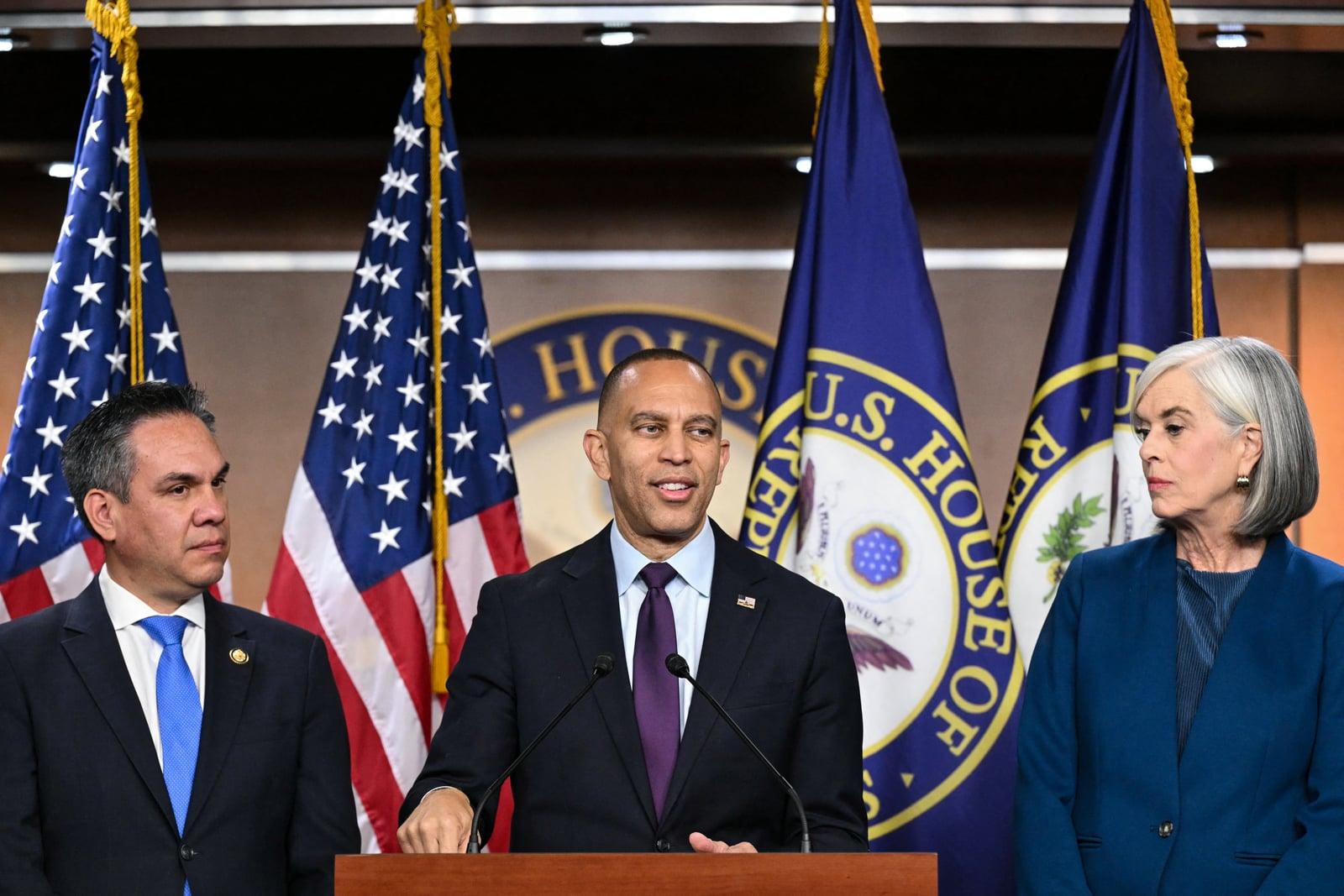
With Democrats set to take slim majorities in both chambers of the 120th Congress, Wall Street analysts and corporate leaders are weighing what divided government will mean for taxes, spending and the economy. Budget watchdogs are doing the same math, and one influential group has put a price tag on the party's first 100 days.
The Committee for a Responsible Federal Budget estimates that the policies House Democrats have outlined for their opening agenda would cost $4.1 trillion through 2037. Without offsets such as spending cuts or tax increases, the proposals would add $4.9 trillion to the national debt over the next decade once interest costs are included.
The five priorities
House Democratic leader Hakeem Jeffries laid out the agenda in November. It calls for reversing Medicaid cuts, restoring SNAP funding, extending Affordable Care Act tax credits, eliminating Trump-era tariffs and ending the war in Iran.
Each item carries its own budget effect. De-escalating the conflict in the Middle East would likely reduce military spending, with the CRFB estimating that continuing the war costs roughly $30 billion a year. Ending the tariffs, by contrast, would remove a major revenue stream. Customs duties, taxes and fees generated $287 billion in 2025 according to the Richmond Fed, up 192 percent from the previous year.
Where the money goes
The largest cost comes from rolling back President Trump's tariffs. The CRFB estimates that repealing Section 301 tariffs on Chinese goods would cost $955 billion, removing Section 232 tariffs on steel and aluminum would cost $780 billion, and undoing Section 338 duties on certain Canadian products would cost $35 billion. Together, tariff repeal accounts for about $1.8 trillion of the total.
Reversing health provisions from the One Big Beautiful Bill Act would cost another $1.6 trillion by 2037. That includes $600 billion to cancel provider tax and state-directed payment limits, and $485 billion to remove Medicaid work requirements. Restoring SNAP funding would add $250 billion over ten years. Higher borrowing to cover these costs would also drive up interest payments on the debt by an estimated $840 billion over the same period.
The debt-to-GDP question
The ratio that most worries economists is debt to GDP, which measures a country's borrowing against its ability to pay it back. The figure currently stands near 121 percent, according to the Federal Reserve Bank of St. Louis. If Democrats pass their agenda without offsets, the CRFB projects the ratio would climb to 135 percent by 2037, compared with 125 percent under an adjusted Congressional Budget Office baseline.
Economists warn that pushing the ratio much higher could lead lenders to demand higher interest rates on Treasuries, raising borrowing costs across the economy and potentially triggering a bond market crisis.
Possible offsets
The CRFB offered several ways to pay for the agenda, though most would be politically difficult. Repealing the One Big Beautiful Bill Act's tax cuts for high earners would generate about $2 trillion, enough to cover roughly half the plan. Repealing all of the law's tax cuts and spending increases, including those aimed at low-income and middle-class households, would generate about $7 trillion, enough to fund the agenda 1.7 times over.
Those choices will now fall to a Congress where margins are narrow and compromise with the Senate and White House will be unavoidable. The debate over the first 100 days is likely to set the tone for the broader fiscal fights ahead.