
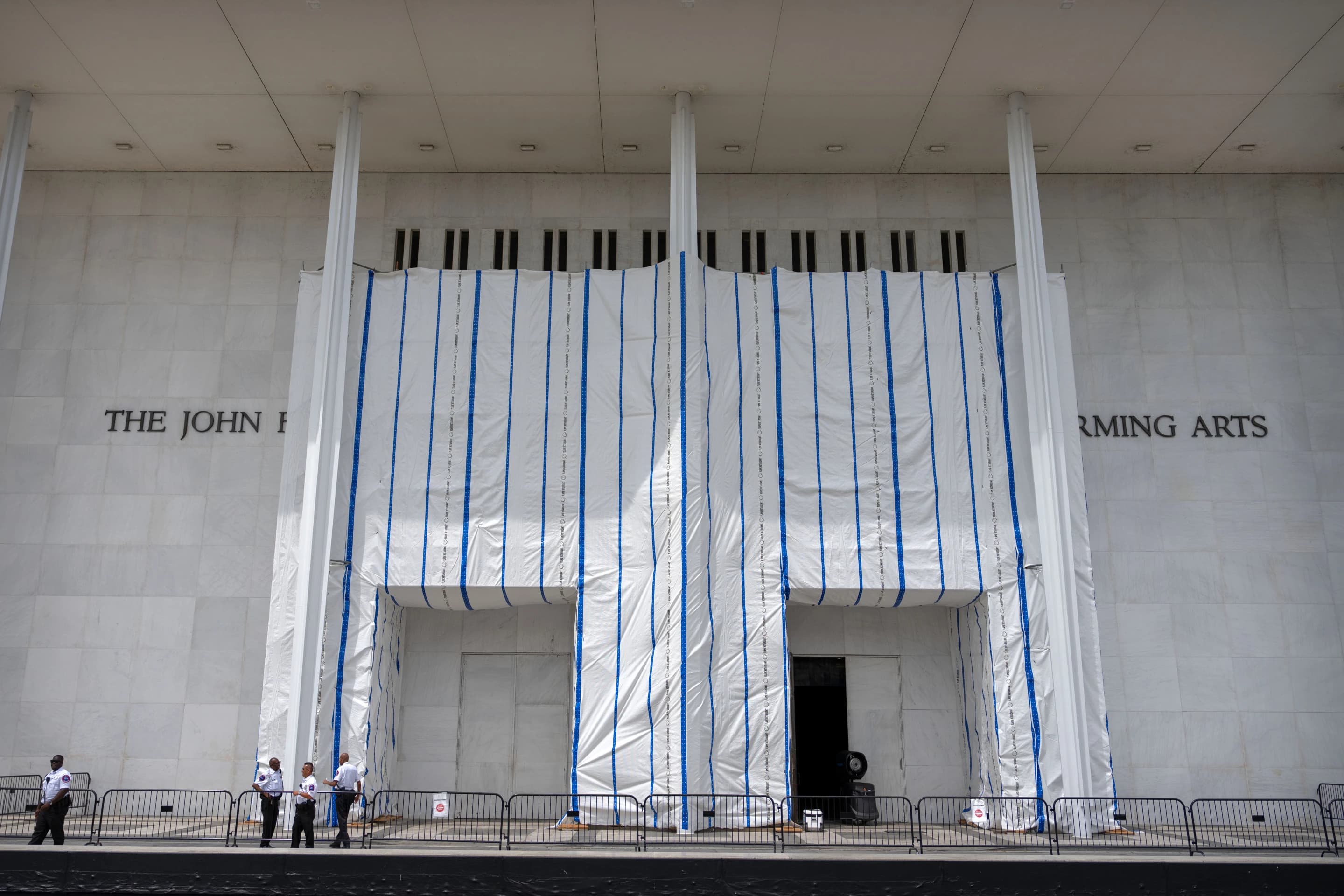
The John F. Kennedy Center for the Performing Arts, its facade currently wrapped in construction tarps as renovation work continues, remains at the center of a broader dispute over who controls the storied Washington institution and how it is run.
The Kennedy Center was created by Congress as a living memorial to President John F. Kennedy, combining a performing arts venue with a mission tied to his legacy. That dual identity, part cultural institution and part national memorial, has made recent leadership changes and disputes over the center's direction unusually charged, drawing attention well beyond the arts world.
Supporters of the current leadership say changes underway are meant to modernize programming and shore up the center's finances, while critics argue the shift threatens the independence and mission that have defined the institution for decades. The dispute has drawn in board members, artists and members of the public who have weighed in publicly on what the center's future should look like.
Legal challenges tied to the fight over the center's direction remain unresolved, and it is not yet clear when or how they will be settled. In the meantime, the ongoing construction work is a visible reminder that the institution is in a period of transition, both physically and organizationally.
Officials at the Kennedy Center have said normal programming continues even as the disputes play out, and that they expect the venue to remain open to the public throughout the renovation and legal process.